How to Prepare for a First Date After Losing Your Partner
Finding courage to date again after losing a partner, and why your nerves are a sign you are ready
March 12, 2026, 1:38:00 PM
By Date A Widower · Published 12 March 2026
Going on a first date after losing a partner feels like stepping into a completely different world. The last time you were single, everything was different: the apps, the expectations, possibly even you. If you're widowed and about to go on your first date in years or decades, the nerves you're feeling are entirely normal, and they don't mean you're not ready.
Thousands of widowed people go through this exact moment every week. The ones who enjoy it most aren't the ones who feel no anxiety; they're the ones who give themselves permission to feel awkward and go anyway. Here's how to set yourself up for a first date that feels manageable, honest, and maybe even enjoyable.

What Should You Expect to Feel Before the Date?
A cocktail of emotions, and most of them will surprise you. Excitement and guilt can show up at the same time, and that's completely normal. Many widowed daters describe feeling as though they're doing something wrong, even when they know logically that they're not. Grief therapists call this "loyalty conflict," and it affects a significant majority of people who date after bereavement.
The guilt tends to be strongest before the date rather than during it. Once you're actually sitting across from someone, having a conversation and maybe laughing, the guilt often fades into the background. Knowing this in advance can help: the hardest part isn't the date itself, it's the hour before you leave the house.
You might also feel a pang of sadness that your late partner isn't the person you're getting ready for. That's not a sign you should cancel. It's a sign you loved someone deeply, and that capacity for love is exactly what makes you a good person to date.
How Do You Choose the Right Kind of First Date?
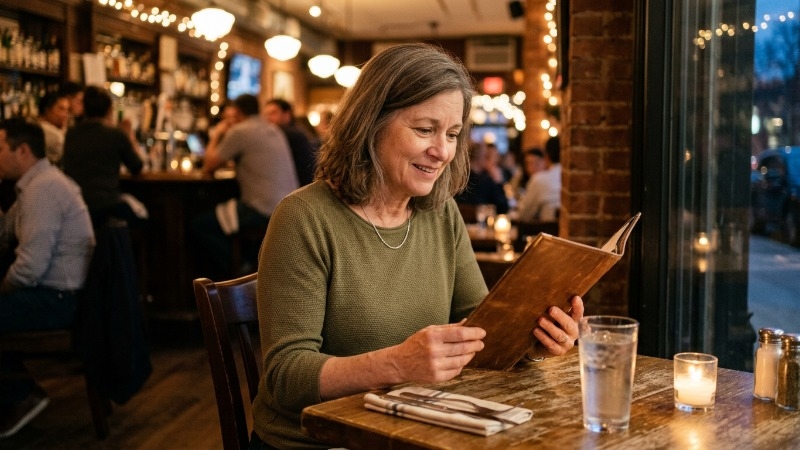
Keep it simple, short, and low-pressure. A coffee or a drink in a pub works far better than a formal dinner for a first meeting. There are two practical reasons for this. First, if the chemistry isn't there, you can wrap things up after 45 minutes without the awkwardness of waiting for a bill. Second, a casual setting takes the performance pressure off both of you.
Avoid anything that involves long periods of silence, like cinema trips, or high-energy activities that make conversation difficult. The whole point of a first date is to find out whether you enjoy talking to each other, so pick somewhere you can actually hear one another speak.
Daytime dates are worth considering too. A Saturday morning coffee or a walk in a local park feels less loaded than an evening out, and many widowed daters say they feel more relaxed meeting someone in daylight. It also removes any ambiguity about expectations at the end of the evening.
If you met online, through a platform like Date a Widower or similar, you've probably already had some back-and-forth messaging. Use that to your advantage: suggest a venue related to something you've both mentioned enjoying. It gives you an instant conversation topic and shows you've been paying attention.

Should You Tell Your Date That You're Widowed?
If you met on a widowed dating site, they already know, and that shared understanding can actually make the first date easier than a typical one. You're not starting from scratch with the heaviest part of your story.
If you met through a general dating app or through friends, you'll need to mention it at some point, but you don't have to lead with it. A first date isn't a therapy session; it's an introduction. If it comes up naturally in conversation, be matter-of-fact about it. Something like "I lost my wife four years ago" is enough. You don't owe anyone your full grief story on a first meeting.
What you want to avoid is either extreme: don't hide it as though it's something to be ashamed of, but don't spend forty minutes talking about your late partner either. Most people will take their cue from you. If you mention it briefly and move on, they'll follow your lead.
One thing that catches many widowed daters off guard is the question "So, have you been single long?" It's a standard dating question with no malice behind it, but it can feel jarring. Having a comfortable, rehearsed answer ready can save you from being blindsided. Something like "I was married for twenty years. My husband passed away three years ago, and I've been taking my time getting back out there" covers everything without inviting a deep dive.
How Do You Handle Nerves on the Day?
The same way anyone handles nerves before something important: acknowledge them, prepare practically, and lower the stakes in your own head.
Start by reminding yourself that a first date is just a conversation. You're not committing to anything. You're not betraying anyone. You're having a cup of tea with another human being to see if you get along. Framing it that way genuinely helps, because the pressure most widowed daters put on themselves is far greater than anything the situation actually demands.
Practical preparation matters too. Choose an outfit you feel comfortable and confident in; something you'd wear to meet a friend, not something you'd normally avoid. Arrive a few minutes early so you're settled when they walk in, rather than rushing through the door flustered. And tell someone where you're going, not just for safety, but because saying it out loud to a friend normalises the whole thing.
If the nerves are truly overwhelming, try a breathing technique: four seconds in, hold for four, out for four. It sounds simple because it is, but it works. The goal isn't to eliminate anxiety; it's to stop it from running the show.
What If the Date Goes Badly?
Then you've survived a bad date, which is a rite of passage for every single person on earth, widowed or not. A bad date doesn't mean dating isn't for you. It means that particular person wasn't the right fit, and that's useful information.
The most common "bad date" scenario for widowed people isn't rudeness or awkwardness; it's simply not feeling a spark. After years with someone you loved deeply, meeting a stranger can feel flat by comparison. That's not necessarily a reflection of the person across the table. It takes time to recalibrate your expectations, and many widowed daters say the second or third date with someone was when they started to feel a genuine connection.
If the date goes truly badly, say something rude happens or you feel uncomfortable, you have full permission to leave. You don't need to sit through something unpleasant out of politeness. A simple "I don't think this is working for me, but I wish you well" is perfectly adequate.
Afterwards, resist the urge to catastrophise. One bad experience doesn't define your dating future. Talk to a friend about it, have a laugh if you can, and give yourself credit for showing up in the first place.
What If the Date Goes Well?
Enjoy it. That's the whole answer, really, but it's worth saying because many widowed daters struggle with allowing themselves to have a good time. If you find yourself laughing, feeling attracted to someone, or looking forward to seeing them again, that's not a betrayal of your late partner. It's proof that you still have the ability to connect with people, and that's something to celebrate.
After a good first date, keep the momentum going with a simple message: "I had a really lovely time. Would you like to do it again?" Don't overthink it or wait three days because some dating guide told you to play it cool. At this stage in life, most people appreciate directness.
If you feel a wave of guilt afterwards, that's normal too. It doesn't cancel out the good feelings. Both can exist at the same time, and they often do for months after you start dating again. The guilt typically lessens with each positive experience, not because you forget your late partner, but because you gradually give yourself permission to live fully again.
What About Second Dates and Beyond?
If the first date went well enough to warrant a second, the pressure actually drops considerably. You've already broken the ice, survived the nerves, and proved to yourself that you can do this. The second date is where you start to relax and where genuine connection has room to develop.
Second dates work best when they involve doing something together rather than just sitting and talking. A walk along a river, a visit to a local market, a gallery, or even a Sunday afternoon cooking together at home all create natural conversation without the pressure of the face-to-face interview format. Activity-based dates also give you a chance to see how comfortable you feel in each other's physical presence, which is something that's hard to gauge over a coffee table.
Don't be surprised if the second date feels less exciting than the first. The adrenaline of doing something brave for the first time has worn off, and you're left with the quieter question of whether you actually like this person. That's not a bad thing; it's the beginning of something more real than first-date sparks.
If after two or three dates you're still not feeling a connection, it's kind to be honest rather than ghosting. A simple message like "I've enjoyed getting to know you, but I don't think we're the right match" is respectful and mature. Most people would rather have clarity than silence.
The fact that you're even considering a first date means you've already done the hardest emotional work. Everything from here is practice, and with each date, whether good or bad, you'll feel a little more like yourself again.
Keep Reading
How to Write a Dating Profile When You're Widowed - Practical tips for writing a dating profile after losing a partner, from what to include to choosing the right photos.
If after two or three dates you are still not feeling a connection, it is kind to be honest rather than ghosting. A simple message like "I have enjoyed getting to know you, but I do not think we are the right match" is respectful and mature. Most people would rather have clarity than silence.
The fact that you are even considering a first date means you have already done the hardest emotional work. Everything from here is practice, and with each date, whether good or bad, you will feel a little more like yourself again. When you are ready, Date A Widower is here to help you take that step with people who understand exactly where you are coming from.